Is there caffeine in hibiscus tea? No. Pure hibiscus tea is naturally caffeine free: an 8 oz cup of hibiscus tea has 0 mg of caffeine, according to USDA FoodData Central. It is a herbal infusion made from the dried calyces of the Hibiscus sabdariffa flower, not from the Camellia sinensis tea plant behind black, green, white and oolong tea, so there is no caffeine to begin with. The exception is a blend: hibiscus mixed with green tea, black tea or another caffeinated plant does contain caffeine. This guide is for anyone drinking hibiscus tea or looking for a drink without caffeine, whether you’re cutting back or want a cup for the evening. Knowing the difference matters because many hibiscus teas on the shelf are blends. Below, you’ll find why hibiscus tea has no caffeine, when it does, how it compares with other teas, how to brew it and how people drink it around the world.
Two caffeine-free hibiscus teas, and one with green tea for comparison:

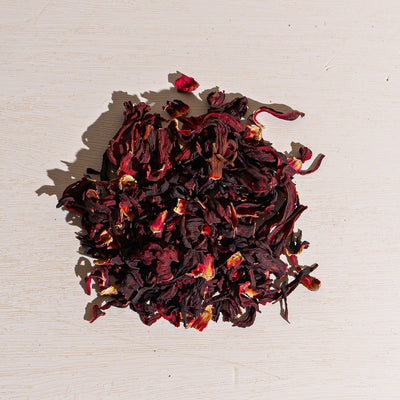
Loose Leaf Tea Company Organic Hibiscus Herbal Tea
Pure organic hibiscus, nothing else: 0 mg caffeine, 3 oz

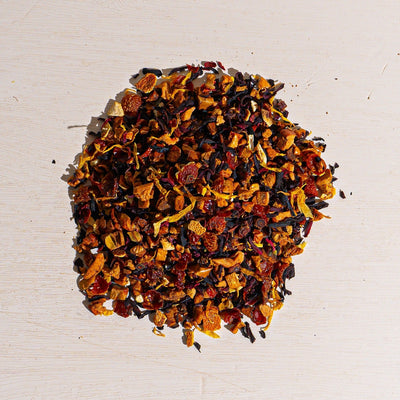
Beach House Ocean Shores Herbal Tea
Hibiscus with rose hips, orange peel and spearmint, caffeine free, 2 oz

Hibiscus with sencha green tea: this one does have caffeine, 100 g tin
Free gift: on a first order, add $25 of Beach House teas and a free Beach House gift is added to your cart. How it works
Not sure what to pick? Take our 6-question tea quiz, or see our best hibiscus teas.
Why Hibiscus Tea Is Caffeine Free
Caffeine is made by a small group of plants, including the tea plant, coffee, cacao, yerba mate, guayusa and guarana. Hibiscus isn’t one of them. Hibiscus tea is made from the calyces of Hibiscus sabdariffa, also called roselle: the fleshy, deep red sepals that wrap the seed pod of the hibiscus flower. Once dried, they steep into a ruby-red, tart cup of hibiscus tea with 0 mg of caffeine; the deep red color comes from the red hibiscus calyces themselves, not from tea leaves or other plants.

That makes hibiscus tea naturally free of caffeine rather than decaf. Decaf tea starts as caffeinated tea and has most of its caffeine removed, so it still holds a few milligrams; our best decaf teas guide covers that side. Plain hibiscus tea never had any caffeine to remove. It is also a different plant from the hibiscus sold at garden centers: the ornamental Hibiscus rosa-sinensis is grown for its big flowers, while Hibiscus sabdariffa is grown for the calyces used in drinks.
The taste of hibiscus tea is tart and fruity, often compared to cranberries or pomegranates, thanks to the hibiscus flower’s natural organic acids. Our guide to what hibiscus tea tastes like goes into the flavor in detail.
When Hibiscus Tea Does Have Caffeine
Plenty of drinks with hibiscus on the label aren’t plain hibiscus tea. Hibiscus is a favorite in blends, and a blend has caffeine whenever one of its other ingredients does:
- Hibiscus with green tea or black tea. These blends contain caffeine, usually less than a full cup of green or black tea because part of every spoonful is hibiscus.
- Hibiscus with yerba mate or guayusa. Both are caffeinated plants; yerba mate alone has about 80–85 mg in an 8 oz cup.
- Bottled and coffee-shop drinks. Some ready-to-drink hibiscus drinks and fruity “refreshers” add green coffee extract or tea for an energy boost.
- Hibiscus herbal blends. Hibiscus mixed with rose hips, berries, orange peel or mint has no caffeine, as long as no tea leaves are added.
To check, read the ingredients rather than the name. If you see tea, green tea, black tea, white tea, matcha, yerba mate, guayusa or green coffee, the drink has caffeine. Many herbal blends also print “naturally caffeine free” on the label, and a hibiscus tea with a single ingredient, hibiscus, is always a safe bet.
Hibiscus Tea vs Other Teas: Caffeine Compared
Here is how hibiscus tea compares with other popular teas, per 8 oz cup:
| Tea | Caffeine per 8 oz cup (approx.) |
|---|---|
| Hibiscus tea | 0 mg |
| Rooibos | 0 mg |
| Chamomile | 0 mg |
| Peppermint | 0 mg |
| Green tea | About 28 mg (20–45 mg) |
| Black tea | About 47 mg (40–70 mg) |
| Yerba mate | About 80–85 mg |
So if you’re choosing between green tea and hibiscus tea, the caffeine difference is simple: green tea has some, hibiscus has none. Our guide to whether herbal tea is caffeine free explains which other herbal infusions are safe bets, and our best caffeine-free teas list has more cups without caffeine to try.
Can You Drink Hibiscus Tea at Night?
Yes. Because plain hibiscus tea has no caffeine, drinking hibiscus tea won’t add caffeine to your evening, which is why many people enjoy hibiscus tea after dinner or as a warm cup before bed, and some drink hibiscus tea daily. Its bright, tart flavor also makes hibiscus tea an easy swap for an afternoon black tea or a soda with lots of sugar.
As with any herbal tea you plan to drink often, if you have questions about whether hibiscus tea is right for you, ask your doctor.
How to Brew Hibiscus Tea
Hibiscus tea is one of the easiest herbal drinks to brew, hot or iced:
- Measure. Use about 1 teaspoon of dried hibiscus, or one tea bag, per 8 oz cup; use up to 2 teaspoons for a stronger flavor.
- Add hot water. Pour water at 190–212°F over the hibiscus.
- Steep. Let it steep for 5–7 minutes, then strain.
- Sweeten if you like. Hibiscus tea is naturally tart; a little honey or sugar rounds it out.

For iced hibiscus tea, brew it double strength and pour it over ice, or cold steep it in the fridge for 6–12 hours; see can you steep tea in cold water for the method. Steeping longer gives a deeper red color and a stronger flavor, but drinking hibiscus tea brewed longer still means 0 mg of caffeine, because there is none in the calyces to extract.
Hibiscus Tea Around the World
Hibiscus tea has been a popular drink in warm climates for centuries, and it goes by many names:
- Agua de jamaica (Mexico and Central America). Hibiscus steeped, sweetened with sugar and served cold, a staple at taquerias and family tables because it is cheap, colorful and refreshing in the heat. Many families add a squeeze of lime or a cinnamon stick.
- Karkade (Egypt and Sudan). Hibiscus tea drunk hot in winter and iced in summer, and often offered to guests.
- Bissap (West Africa). A sweetened hibiscus drink, often flavored with mint or ginger.
- Sorrel (the Caribbean). A spiced hibiscus drink with ginger, cinnamon, cloves and sugar, made for the Christmas season in Jamaica and Trinidad and often served at holiday tables.
- Sour tea (Iran). One of the local names for hibiscus tea, after its tartness.
Whatever it’s called, a drink made only from hibiscus calyces has no caffeine. Spices, sugar and fruit change the flavor, but they don’t add caffeine either; only tea, coffee or other caffeinated plants do.
FAQs
Does hibiscus tea keep you awake?
Plain hibiscus tea has no caffeine, so it won’t keep you awake the way coffee or black tea can. A hibiscus blend with green tea or black tea does contain caffeine, so check the label if you’re drinking it late in the day.
Does steeping hibiscus tea longer add caffeine?
No. Steeping longer makes hibiscus tea darker and more tart, but hibiscus itself has no caffeine to release, so the cup stays at 0 mg however long it steeps.
Is hibiscus tea the same as sorrel?
In the Caribbean, yes: sorrel is the local name for roselle, the hibiscus plant whose calyces make hibiscus tea, and for the spiced holiday drink made from it. Elsewhere, sorrel can also mean a leafy green herb, which is a different plant.
Final Thoughts
So, is hibiscus tea caffeine free? Yes: a cup of plain hibiscus tea has 0 mg of caffeine, because it’s made from the dried calyces of Hibiscus sabdariffa rather than the tea plant. Only blends that add green tea, black tea, yerba mate or another caffeinated plant contain caffeine, so read the ingredients when you buy. Hot or iced, sweetened or plain, hibiscus tea is an easy way to enjoy a cup without caffeine any time of day.
Ready to try it? Browse our hibiscus tea collection for pure hibiscus and hibiscus blends, or see our picks of the best hibiscus teas.
Behind the Cup

More about hibiscus tea
More herbal teas: Best herbal teas · Best rooibos teas · Best yerba mate · Best chamomile teas · Best ginger teas