Quick Answer
The best tea for beginners is one that tastes good without practice. For most people that is a flavored black tea such as Earl Grey, which takes boiling water and is hard to get badly wrong. Our pick is Beach House Fog Horn Grey.
For a cup with no caffeine, start with Harney & Sons Chamomile or with August Psychocandy, a rooibos, which is a South African herbal tea. To taste several teas before you buy a full bag, start with the Plum Deluxe Best Sellers Sampler.
Below are eight places to start: seven teas of different kinds and one sampler set. After them come three more samplers, the different types of tea in plain words, a caffeine table, the gear for a first cup, a brewing table and a short guide to choosing. Short on time? Our tea quiz asks six questions and suggests teas to match, and more samplers are in the tea samplers collection.
How We Picked
We chose from the teas we carry and compared them on five things:
- One tea of each kind — an Earl Grey, a chai, a green tea, an oolong, a rooibos, a chamomile, a fruit blend and one sampler, so you learn which kind of tea you like before you buy more of it.
- Easy to brew — most of the list takes boiling water. The green tea needs water well short of boiling. Seven of the eight are loose leaf tea, so you need an infuser, which we cover below; the chamomile comes in sachets.
- A range of caffeine — three teas with caffeine, three with no tea leaf in them, one decaf and one sampler of caffeinated teas.
- A small size first — each Buy button opens a small size: a bag of 1 to 2.5 oz, a tin of 20 sachets, a 15 cup bag or a sampler set. Where a tea comes in other sizes, they are on the same page.
- Stock — every tea here was in stock when this guide was written.
Ingredients, caffeine and brewing are given as each brand states them; where a brand states nothing, we say so. All eight are teas our customers already order. One tea per brand, and the numbers are there to find your place in the list, not to rank the teas from best to worst.
Beginner Teas at a Glance
# |
Tea |
Type |
Best for |
Caffeine |
Price |
|---|---|---|---|---|---|
1 |
Beach House Fog Horn Grey Black Tea |
Black tea |
An Earl Grey to start with |
Caffeinated |
$16.00 |
2 |
Culinary Teas Decaf Chai Tea |
Decaf black tea with spices |
Chai spices on a decaf base |
Decaf |
$6.99 |
3 |
Plum Deluxe Best Sellers Tea Sampler Set |
Black, oolong and green tea |
Eight teas in one order |
Caffeinated |
$15.49 |
4 |
Danfe Mt. Pumori Best Green Tea (Certified Organic) |
Green tea |
A smooth, less grassy green tea |
Caffeinated |
$16.49 |
5 |
Teappo Osmanthus Oolong Tea |
Oolong tea |
A floral oolong |
Caffeinated |
$30.99 |
6 |
Loose Leaf Tea Company Organic Berry Berry Herbal Tea |
Fruit and hibiscus |
A berry cup, hot or iced |
None (no tea leaf) |
$7.49 |
7 |
Harney & Sons Chamomile Herbal Tea |
Chamomile |
A caffeine free cup with nothing to measure |
Caffeine free |
$14.49 |
8 |
August Uncommon Tea Psychocandy Pumpkin Caramel Rooibos |
Rooibos |
A sweet rooibos for the evening |
Caffeine free |
$14.09 |
8 Best Teas for Beginners in 2026
Each tea below comes from a different brand, and each was in stock when we checked. The eight have very different flavors, so pick by type, not by number: the best teas to start with are the ones closest to what you already like to drink. If a type name is new to you, the table of tea types below explains each one.
1. Beach House Fog Horn Grey Black Tea – Best first black tea

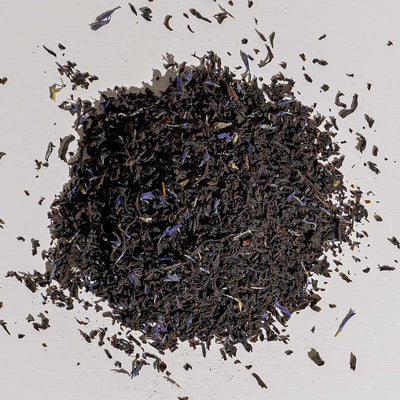
What’s in it: Organic black tea with organic lavender, organic cornflowers and organic orange peel, scented with natural oil of bergamot. Bergamot, a citrus fruit, is what makes a black tea an Earl Grey tea. The ingredient list ends with “pure extract”, and the brand does not say of what. The pouch label reads “contains caffeine”. Beach House mixes its blends by hand in small batches on Washington’s Long Beach Peninsula.
How it tastes: Smooth and slightly creamy, with an aroma of oranges and vanilla underneath, as the brand describes it.
When to pour it: A morning or afternoon cup, plain or with a little milk. Beach House steeps a heaping teaspoon in 8 oz of boiling water for four to six minutes; the pouch in the photo prints three to five. Start at four.
2. Culinary Teas Decaf Chai Tea – Best decaf chai

What’s in it: Decaf black tea with ginger, cinnamon, cardamom, black and white pepper, clove and nutmeg. Culinary Teas calls it a classic masala chai, which is black tea with spices, and lists the caffeine content as none. Decaffeinated tea usually keeps a trace of caffeine, so if you avoid it strictly, choose the chamomile or the rooibos below. The brand packs its teas at a facility that may use nuts or nut extracts.
How it tastes: Spicy and bold, with a gingery finish, in the brand’s words.
When to pour it: When you want chai late in the day. The brand steeps one to two teaspoons per cup for five to seven minutes in water at 205 to 212°F, longer than the three to five minutes in our brewing table; for this chai, follow the brand. It counts 8 to 10 cups per ounce. Chai is traditionally made with milk and sweetened; add both to taste.
3. Plum Deluxe Best Sellers Tea Sampler Set – Best if you cannot decide

What’s in it: Eight loose leaf teas: a full-size 1 oz bag of House Blend black tea, which the brand counts as 15 to 20 cups at a flat teaspoon each, and seven samples of two to three cups each: Peaches ’n’ Cream oolong, Gratitude strawberry Earl Grey, Porch Sippin’ Pecan, Full Moon Chai, Abundance green tea, Reading Nook and Coconut Macaron. Plum Deluxe blends by hand in Portland, Oregon.
How it tastes: Mostly flavored black teas: vanilla, peach, strawberry and bergamot, cinnamon and pecan, chai spices, rose and lavender, coconut. The green tea and the peach oolong, which the brand blends from black tea and oolong, show you two more types. Three blends list nut essences (pecan, walnut and almond) and one has coconut pieces, so skip this set if you avoid tree nuts.
When to pour it: As a first order. Every tea in the set is loose leaf, so you need an infuser; steeping notes are included. The same page has a second set, which the brand labels caffeine free: seven herbal blends and one decaf Earl Grey, and decaf tea may keep a trace of caffeine. It is not nut free either: one blend lists hazelnut essence and another has coconut pieces.
4. Danfe Mt. Pumori Best Green Tea (Certified Organic) – Best first green tea

What’s in it: Loose leaf green tea from Ilam, Nepal: one tea from one region, not a blend. The pouch lists a single ingredient, Himalayan green tea leaves, carries the USDA Organic seal and says the tea grows at 7,000 to 7,500 feet. Danfe sources its loose leaf teas from Nepal and estimates 25 to 35 mg of caffeine in an 8 oz cup of this one.
How it tastes: Smooth and creamy, with a light vegetal sweetness, a nutty undertone and a clean finish, in the brand’s description. Danfe says it is less grassy than many Japanese green teas and less astringent, meaning less drying in the mouth, than green teas grown lower down, which is why we picked it as a first green tea.
When to pour it: A late morning or afternoon cup. Brew it the brand’s way: 2.5 grams in 8 oz of water at 170 to 175°F for two to three minutes, never with boiling water. That is about one teaspoon of leaf. The brand lists two infusions, so the same leaves make a second cup.
5. Teappo Osmanthus Oolong Tea – Best first oolong

What’s in it: Oolong tea from Taiwan with osmanthus flowers and natural flavor, as the label lists it. Oolong sits between green tea and black tea. Teappo rates the caffeine as moderate, 30 to 50 mg in an 8 oz cup. Teappo’s founders, a wife and husband, come from a family that has worked in Taiwan’s tea industry for over a century, by the brand’s account.
How it tastes: Fresh and sweet, with a bold yet elegant osmanthus scent, in the brand’s words. Osmanthus is a small yellow flower with a sweet, fruity smell, and oolong scented with it is a traditional pairing in Chinese and Taiwanese tea. We picked it as a first oolong because the flavor is easy to recognize: sweet and floral.
When to pour it: An afternoon cup, hot or iced. It comes in one size, which Teappo counts as about 24 servings. The brand uses one teaspoon, 3 grams, per 8 oz of water at 200°F for five minutes, and says the leaves can be re-brewed up to three times.
6. Loose Leaf Tea Company Organic Berry Berry Herbal Tea – Best fruit tea, hot or iced

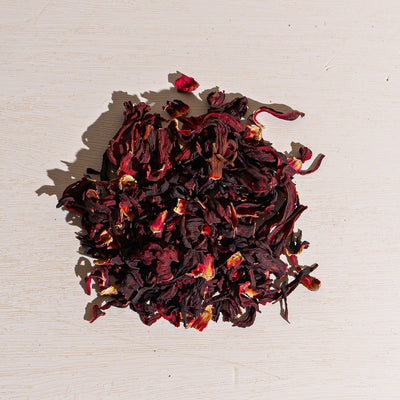
What’s in it: Elderberry, currant, hibiscus, rose and strawberry leaves, all certified organic, plus natural essence. There is no tea leaf in the blend; the brand itself makes no caffeine statement. Loose Leaf Tea Company is a small business in the hills of central Virginia, where its founder blends tea in a vintage Airstream, by her own account.
How it tastes: A bright red cup, sweet and tart, in the brand’s words. Hibiscus gives the cup its red color and much of its tartness.
When to pour it: For anyone who likes fruit flavors more than the taste of tea. The brand calls it wonderful hot or iced. The brand prints no brewing instructions; fruit and herbal blends generally take boiling water and five to seven minutes. A spoon of honey rounds off the tartness.
7. Harney & Sons Chamomile Herbal Tea – Best first herbal tea

What’s in it: One ingredient: Egyptian chamomile. Harney uses the whole flower and lists the tea as caffeine free. Harney & Sons has blended tea since 1983 and works from Millerton, New York.
How it tastes: Light-bodied and mellow, floral, with a subtle apple note: that is how Harney describes the cup, which brews a bright, clear yellow.
When to pour it: The last cup of the day. One sachet brews a 12 oz mug in five minutes with boiling water, and no infuser is needed. Harney says a longer steep deepens the flavor without bitterness, and that chamomile is usually taken plain or with a little honey.
8. August Uncommon Tea Psychocandy Pumpkin Caramel Rooibos – Best first rooibos

What’s in it: South African rooibos with dried pumpkin, Turkish apple, caramel, blackberry leaf and Madagascar vanilla, plus flavors of caramel, vanilla and pumpkin. August blends its teas in Germany and lists this one as caffeine free. The bag is marked vegan and gluten free.
How it tastes: Baked pumpkin, salted butter caramel and golden syrup, in the brand’s words: “all pumpkin, no spice”. August says milk makes it creamier.
When to pour it: An evening cup, or dessert in a mug. The 15 cup bag holds 50 grams, and the brand uses 3.5 grams, which it calls about two teaspoons, in 10 oz of boiling water for four to five minutes. Rooibos does not turn bitter, so an extra minute only makes the cup stronger. A 4 cup sample is on the same page.
Tea Samplers for Beginners

A sampler is a quick way to start drinking tea and find the types you like: several small portions in one order, so you taste before you choose a full bag. The Plum Deluxe set above is loose leaf tea. Two of the three below come in tea bags or sachets and need no infuser.
All three were in stock when this guide was written. The rest are in the tea samplers collection.
Tea with Tae Bestsellers Tea Bento Box – Best sampler with no gear needed

What’s inside: Six mini tubes with five pyramid sachets each, 30 sachets in all. The six are Calming Tea, Jasmine Green, Lavender Earl Grey, Nighttime Routine, Spa Bliss and Tae’s Chai. Those names are the brand’s own, and we make no claim about what any of the teas does. The Earl Grey, the chai and the jasmine green tea have caffeine; the brand lists the three herbal blends as caffeine free.
Who it suits: Someone with a mug and a kettle and nothing else. Pyramid sachets need no infuser, and the six teas cover black tea, green tea, chai and herbal blends, five cups of each. Calming Tea lists licorice root and Nighttime Routine lists valerian root; read the ingredient lists if you avoid either.
Harney & Sons Harney Heritage Teabag Sampler – Best sampler one cup at a time

What’s inside: A black box of 15 foil-wrapped teabags. Harney describes it as 15 teas pre-selected from its foil-wrapped teabag collection and chooses the flavors itself; the brand does not publish the list. The box can be refilled with any Harney teabags.
Who it suits: Someone who wants a new tea every day for two weeks, with nothing to measure. Read each envelope before you brew: Harney’s teabag range includes teas with caffeine, decaf teas and herbal teas.
Culinary Teas Oolong Tea Sampler – Best sampler for going deeper into one type

What’s inside: Four Chinese oolongs, one ounce of each: Premium Milk Oolong, Ti Kuan Yin Iron Goddess, Se Chung and J’adore Mango. Three are plain oolong tea; the mango one adds mango pieces, sunflower and calendula petals and natural flavors. Milk oolong has no milk in it: the brand lists its only ingredient as oolong tea. Culinary Teas says its teas are packed at a facility that may use nuts or nut extracts.
Who it suits: A second step, once you know you like oolong: the three plain ones run from floral and creamy to woody and toasty, by the brand’s taste notes, and the fourth is flavored with mango. The brand counts 8 to 10 cups per ounce. It steeps one to two teaspoons per cup for three to four minutes at 185 to 195°F.
The Different Types of Tea: A Beginner’s Guide

Every true tea comes from one plant, Camellia sinensis, the tea plant. What separates the types is the oxidation process: how long the picked tea leaves react with air before heat stops them. Herbal teas are a separate family. They are made from flowers, fruit, herbs and spices, with no tea plant in them.
Type |
How it is made |
How it tastes |
|---|---|---|
Black tea leaves are rolled, fully oxidized and dried |
Bold and malty, and the type most often drunk with milk. Earl Grey tea, English Breakfast and most chai are built on black tea |
|
Green tea leaves are heated at high temperatures soon after picking, which stops oxidation. Most Japanese green teas are steamed; most Chinese green teas are pan-fired |
Fresh and light green in the cup: grassy when steamed, nuttier when pan-fired. It turns bitter in boiling water |
|
Partly oxidized, anywhere between green and black, and often rolled into small pellets |
From light, with floral flavors, to dark and roasted |
|
Minimal processing: the leaves are withered and dried, and little else |
Delicate, with a light sweet flavor |
|
Aged tea from Yunnan, China. Raw pu erh tea ages slowly for years; ripe pu erh is fermented in piles to get there sooner |
Ripe pu erh has an earthy flavor, dark and smooth. Raw pu erh is brighter and sharper. A second step, not a first |
|
Not tea: the needle-like leaves of the South African red bush plant, oxidized and dried |
Smooth and slightly sweet. It does not turn bitter |
|
Not tea: dried flowers, herbs, fruit and spices such as chamomile, peppermint, hibiscus and ginger |
Whatever is in the blend: floral, minty, tart or spiced |
Two more names you will meet. Matcha tea is green tea ground to a fine powder, whisked into the water and drunk whole. Lapsang souchong is a Chinese black tea from Fujian province, dried over pine smoke. Its smoky flavor divides people, and it is not where most beginners start.
Every type ends with a drying process, which is why dry tea keeps for months in a closed tin away from light and heat. For the full list of styles, see our guide to 100 types of tea.
Caffeine by Tea Type
Caffeine depends on the plant, not on the color of the cup. Anything made from the tea plant has some. Rooibos, chamomile and fruit blends have none, unless tea leaves or another caffeinated plant, such as yerba mate or cocoa, are blended in.
Type |
Typical caffeine in an 8 oz cup |
On this list |
|---|---|---|
Black tea |
40–70 mg |
Fog Horn Grey. The label reads “contains caffeine” and gives no figure |
Oolong tea |
30–50 mg |
Osmanthus Oolong. Teappo’s own figure is 30 to 50 mg |
Green tea |
20–45 mg |
Mt. Pumori Best Green Tea. Danfe’s own estimate is 25 to 35 mg |
White tea |
Varies widely. Often quoted as 15–30 mg, but teas made of buds can match green tea |
None on this list |
Decaf black tea |
A trace, typically 2–5 mg |
Decaf Chai. Culinary Teas lists its caffeine content as none |
Rooibos, chamomile and fruit blends |
None |
Psychocandy and Chamomile, which their brands list as caffeine free, and Berry Berry, which has no tea leaf in it |
Brewed coffee, for comparison |
About 95 mg |
Not on this list |
These are typical ranges for each type, not measurements of the teas above, and steeping moves them: more leaf, hotter water and a longer steep all pull more caffeine into the cup.
For reference, USDA food data puts an 8 oz cup of brewed black tea at about 47 mg of caffeine, brewed green tea at about 28 mg and brewed coffee at about 95 mg.
If you are cutting back, the caffeine free teas are herbal blends and rooibos, and the decaf teas are real tea with most of the caffeine taken out.
What You Need to Start Drinking Tea

Less than you think. Tea bags and sachets need a mug and hot water. Loose leaf tea needs one more thing: something to hold the leaves while they steep and to lift them out when the time is up.
- A way to heat water. Any kettle will do, and so will a pot on the stove. A kettle with temperature settings helps with green tea but is not required; the kettles collection has them if you want one.
- An infuser. A basket infuser sits in the mug and gives whole leaves room to open. A tea ball is smaller: fine for a cup of black tea, cramped for large leaves such as oolong. The August One Cup Infuser is a basket infuser for one mug, and the Piper and Leaf Piper Tea Ball is a tea ball. More are in the tea infusers and infuser mugs collections.
- A teaspoon and a timer. A level teaspoon of most loose tea weighs roughly 2 to 3 grams, the usual amount for an 8 oz cup. The timer on your phone is enough.
New to infusers? Our guide on how to use a tea infuser walks through the kinds, and our list of the best tea infusers covers the ones we carry.
How to Brew Your First Cup of Tea

Three numbers decide how a cup turns out: how much leaf, how hot the water, how long the steep. The package usually prints all three, and when it does, follow the package. When it does not, start here.
Tea |
Leaf for 8 oz of water |
Water |
Time |
|---|---|---|---|
Black tea |
1 teaspoon or 1 tea bag |
200–212°F, just off the boil |
3–5 minutes |
Green tea |
1 teaspoon |
160–185°F, well short of boiling |
2–3 minutes |
White tea |
1 heaping teaspoon |
160–185°F |
2–3 minutes |
Oolong tea |
1 teaspoon |
185–205°F |
3–5 minutes |
Rooibos and herbal teas |
1 heaping teaspoon or 1 sachet |
212°F, boiling |
5–7 minutes |
Five Steps to a Good First Cup
- Heat fresh water. Boiling water suits black tea, rooibos and herbal teas. For green tea, mix three parts boiling water with one part cold tap water in a spare mug before you pour: that gives roughly 175°F.
- Measure the tea. One teaspoon of loose tea for every 8 oz of water, a heaping one for white tea, rooibos and herbal teas. Put it in the infuser.
- Pour and start the timer. Pour the hot water over the leaves in the infuser.
- Take the leaves out. This is the step beginners skip. Leaves left in the cup keep steeping, and black and green tea turn bitter.
- Taste it plain, then adjust. Milk suits black tea and chai. Honey suits most teas. Try the cup without either first.
If the cup is too strong, use less leaf or a shorter steep. If it is too weak, use more leaf. With black and green tea, more time adds bitterness faster than it adds flavor; rooibos and herbal teas can simply steep longer.
For more detail, see how to brew loose leaf tea and how to make tea with tea bags.
Loose Leaf Tea or Tea Bags?

Start with whichever gets you to drink tea. Tea bags and sachets are the easy way in: no gear and nothing to measure. Loose leaf tea gives you far more to choose from and lets you set the strength yourself.
The difference is mostly the size of the leaf. Paper tea bags usually hold smaller pieces, which brew fast and strong. Pyramid sachets and loose tea usually hold whole leaves or larger pieces, which need room to open and a little more time.
On this list, the Harney chamomile, the Tea with Tae box and the Harney sampler need no infuser; everything else is loose tea. Browse the loose leaf tea, tea bags and tea sachets collections, or read tea bags vs loose leaf for the longer comparison.
How to Choose Your First Tea
- Start from what you already drink. Coffee with milk points to black tea or chai, and our list of teas for coffee drinkers goes further. The one chai in the main list, from Culinary Teas, is decaf. Two of the samplers hold a chai with caffeine: Full Moon Chai in the Plum Deluxe set and Tae’s Chai in the Tea with Tae box. Juice or lemonade points to a fruit blend. If you dislike anything bitter, start with rooibos.
- Then decide on caffeine. For the morning, black tea, oolong or green tea. For the evening, rooibos, chamomile or a fruit blend with no tea leaf in it.
- Pick a flavor you already know. Citrus, caramel, vanilla, berries, or chai spices such as cinnamon, ginger and black pepper: a familiar flavor makes an unfamiliar drink easier to like.
- Buy small, then buy again. A 1 oz bag makes 8 to 20 cups by the counts of the brands on this list, depending on how much leaf goes into each cup. Either way, it is enough to decide.
FAQ
What is the best tea for beginners?
A flavored black tea such as Earl Grey is the usual first step. It takes boiling water, works with or without milk and is hard to get badly wrong. If you want no caffeine, start with rooibos or chamomile, which have no tea leaf in them.
What is the best tea for people who do not like tea?
Often the problem was one bitter cup of black or green tea that steeped too long. Try a tea with no tea leaf in it: rooibos, which is smooth and slightly sweet, or a fruit blend built on hibiscus and berries, which tastes closer to juice than to tea. Both take boiling water and are forgiving about timing.
How do I get started with loose leaf tea?
You need hot water, a mug and an infuser. Put one teaspoon of tea per 8 oz of water in the infuser and pour the hot water over it. Lift the infuser out when the time is up. That is three to five minutes for black tea, two to three for green tea, and five to seven for rooibos and herbal teas.
Why does my tea taste bitter?
Usually the water was too hot or the leaves stayed in too long. Green tea turns bitter in boiling water: use water around 175°F and steep it two to three minutes. Black tea turns bitter when it steeps well past the time on its package, usually three to five minutes. Take the leaves or the tea bag out when the time is up.
How much caffeine is in tea compared with coffee?
Less, in a typical cup. An 8 oz cup of black tea has about 40 to 70 mg of caffeine and green tea about 20 to 45 mg, against about 95 mg in an 8 oz cup of brewed coffee. Rooibos and chamomile have none.
Final Notes
If you buy one tea, buy the type closest to what you already drink. That is black tea or chai if you drink coffee with milk, and a fruit blend if you drink juice. For the evening, choose rooibos or chamomile. If you cannot decide, a sampler decides for you.
Then brew it the way the package says, or by the brewing table above if the package says nothing. Take the leaves out on time, and change one thing at a time until the cup is the way you like it.
When you know which type you like, the rest of the shelf is in the loose leaf tea collection, and the tea quiz will suggest where to go next.
Prices and stock were checked at tasteoftea.com in October 2026. Ingredients, caffeine and brewing are given as each brand states them on its own site and labels. Caffeine ranges are typical figures for an 8 oz cup and vary with the tea and the steeping.
Behind the Cup