Highlights
- A creamy, vanilla-sweet purple ube bubble tea whose base you can make at home in about 15 minutes.
- Ube is the Filipino purple yam best known for its vanilla-like, nutty flavor.
- With black tea, each serving has some caffeine (the amount varies by tea and brewing); the ube latte version is caffeine-free.
Ube milk tea is a creamy, vanilla-sweet purple drink made by blending ube — a Filipino purple yam — into milk over a black-tea base, then serving it iced with chewy tapioca boba pearls. It’s also called ube bubble tea.
The drink base takes about 15 minutes using ube jam (ube halaya), ube powder, or ube extract. Allow extra time for tapioca pearls unless you use a quick-cooking variety.
Below is the core ube milk tea recipe, a warm ube latte version, how ube compares to taro, and easy vegan and no-powder swaps.
Ube milk tea is a favorite for anyone who loves colorful, dessert-style bubble teas or wants to explore Filipino flavors at home. Ube is a staple of Filipino cooking, so making this drink is an easy, low-effort way to get to know one of the Philippines’ signature ingredients — and to customize the sweetness, caffeine, and dairy to your own taste.
On this page
What Is Ube Milk Tea?
Ube milk tea is a bubble-tea-style drink that pairs the flavor of ube — a bright purple yam (Dioscorea alata), strongly associated with Filipino cuisine and native to tropical Asia, including the Philippines — with a brewed black tea base and milk.
It’s most often poured over ice and finished with black tapioca boba pearls. The ube gives it that signature lavender-to-violet color and a soft flavor.
The black tea keeps it from tasting like a plain milkshake, which is what separates ube milk tea from a simple ube latte.
What is ube made of?
Ube is a whole root vegetable — a purple yam. Its deep color comes from natural anthocyanin pigments, the same family found in blueberries and purple sweet potato.
In a drink, ube is usually added as ube jam (ube halaya), a spoon of ube paste, ube powder, or ube extract rather than fresh ube. If you use fresh ube, peel and fully cook it until tender, then mash it into a smooth paste — do not use raw ube in the drink.
What Does Ube Milk Tea Taste Like?
Ube milk tea tastes creamy and mild, with vanilla-like and nutty notes. Many people compare ube to a mix of vanilla and pistachio or white chocolate.
It is not sharp or fruity. The milk rounds it into something smooth and dessert-like, while the black tea adds a light backbone and a touch of tannin.
The boba pearls add chewy texture, and if you toss them in brown sugar syrup, a subtle caramel note.
Ube itself is only lightly sweet, so most of the sweetness comes from what you add — condensed milk, simple syrup, or brown sugar — and from sweetened ube products like halaya.
Is Ube Milk Tea Good for You?
Ube milk tea is best thought of as a treat rather than a health drink. Whole ube contains carbohydrates, fiber, and naturally occurring purple pigments. However, the nutritional profile of ube milk tea depends on whether it is made with real yam, sweetened halaya, flavored powder, or extract.
Anthocyanins are plant pigments that have been studied for antioxidant properties, but the amount present in a finished drink varies widely by product.
The calorie, carbohydrate, sugar, and caffeine content varies substantially depending on the ube product, milk, sweetener, tea, and amount of boba used. A lightly sweetened homemade version without boba will differ significantly from a large shop-style drink made with sweetened powder, condensed milk, syrup, and tapioca pearls.
As a rough example, a 16 oz serving made with about 1/4 cup sweetened ube halaya, whole milk, a little syrup, and 1/2 cup cooked boba falls somewhere around 300–400 calories, while a lighter, unsweetened version without boba can be far lower. For a precise figure, run your exact products through a nutrition calculator.
Ube milk tea is a dessert-style drink, most popular with fans of colorful bubble teas and anyone exploring Filipino flavors. Ube is a staple of Filipino kitchens (think ube halaya and halo-halo), and this drink is part of how that cuisine has gone global.
Ube vs Taro Milk Tea: What’s the Difference?

They look similar but they’re different plants. Ube is often described as more aromatic and vanilla-like, while taro is usually milder, earthier, and starchier. Ube is a purple yam with a naturally vivid color; taro is a separate root, paler grey-lavender (the deep purple in many commercial taro drinks often comes from added coloring).
Taro milk tea is the classic Taiwanese bubble tea flavor and works as a thickener; ube leans more toward dessert. Here they are side by side:
| Ube | Taro | |
|---|---|---|
| Plant | Purple yam (Dioscorea alata) | Root vegetable (Colocasia esculenta) |
| Color | Naturally vivid purple | Pale grey-lavender (often dyed) |
| Flavor | Often vanilla-like and nutty | Usually mild, earthy, and starchy |
| Texture in drinks | Creamy, dessert-like | Mellow, thickening |
| Best for | Vanilla-forward milk tea & lattes | Classic Taiwanese bubble tea |
You can substitute one for the other in a milk tea, but the character shifts — ube reads more vanilla and aromatic, taro more earthy and neutral.
Ingredients You’ll Need

This ube milk tea recipe makes about 2 servings:
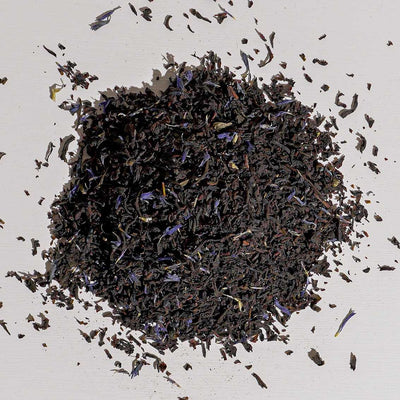
- Black tea — 2–3 teaspoons loose-leaf black tea, approximately 4–6 g, or 2–3 standard tea bags (Earl Grey or plain black both work)
- Ube — ube jam (ube halaya), ube powder, or ube extract. Amounts differ a lot by product — see “Which ube to use” below
- Milk — about 1 to 1.5 cups (dairy or plant-based)
- Optional richness — a splash of evaporated milk or coconut milk
- Sweetener — condensed milk, simple syrup, maple syrup, or brown sugar, to taste (go easy if your ube product is already sweetened)
- Cooked tapioca pearls (boba pearls) — about 1/2 cup, classic for bubble tea
- Ice cubes — 1–2 cups
Which ube to use: jam, powder, or extract

These are not interchangeable one-for-one — each behaves differently:
- Ube jam (halaya) — adds sweetness and body. It is normally already sweetened and may contain milk, butter, coconut milk, flavoring, or coloring, so taste before adding more sweetener and check the label for allergens. Start with about 1/4 cup for two servings.
- Ube powder — convenient to store, but preparation varies by product. Pure dehydrated-yam powder and sweetened instant ube mixes differ a lot, and some powders need to be rehydrated or cooked before use. Follow the package directions.
- Ube extract — mainly adds aroma and color, not body. Start with about 1/4 teaspoon and increase to taste, guided by the product label.
All three can flavor the drink, but they produce different results: halaya adds sweetness and body, pure powder can add yam flavor and texture, and extract mainly adds aroma and color.
How to Make Ube Milk Tea (Step by Step)

Start to finish, the drink base takes about 15 minutes, plus boba cooking time if you’re making the pearls from scratch.
Step 1 — Brew the tea strong
Steep 2–3 teaspoons of loose-leaf black tea (approximately 4–6 g) or 2–3 standard tea bags in about 1 cup of just-boiled water for 4–5 minutes, then remove the tea.
Brewing it strong keeps the tea flavor present once milk and ice dilute it. Let it cool.
Step 2 — Cook the boba pearls
If using dry tapioca pearls, cook the pearls per the package directions — usually a simmer, then a rest off the heat.
Toss the cooked boba pearls in a little brown sugar syrup so they stay loose and sweet. The brown sugar gives the pearls that classic bubble tea caramel note.
Step 3 — Make the ube base
Whisk your ube (jam, powder, or extract) into the milk until smooth and evenly purple — this ube base is the heart of the drink.
If using powder, a quick blend or vigorous whisk prevents lumps. For extra richness, whisk in a splash of evaporated milk or coconut milk. Sweeten to taste here, keeping in mind that sweetened halaya already adds sugar.
Step 4 — Assemble the drink
Add the boba pearls to the bottom of the glass, then a few ice cubes. Pour in the ube base, then top with the cooled black tea.
Stir before drinking so the tea and ube base combine, and serve with a wide boba straw.
Step 5 — Taste and adjust
Too strong on tea? Add more ube base. Not sweet enough? Add a little more syrup or condensed milk. Prefer it warm? Skip the ice and use hot tea and warm ube milk.
Ube Latte Version (No Tea, No Boba)

Want the ube flavor without the tea or the pearls? Make an ube latte instead — the same idea, minus the black tea and boba.
- Warm about 1 cup of milk (steam it for foam if you have a frother).
- Whisk in your ube (powder or jam) plus sweetener until smooth, following the product guidance above.
- Pour into a cup. For an iced ube latte, use cold milk and pour over ice cubes.
The result is a caffeine-free, dessert-forward purple drink. Add a shot of espresso or a splash of strong black tea and it moves back toward a milk tea.
Make It Your Way: Swaps & Variations
No-powder swaps
No ube powder? Ube jam (halaya) and ube extract both work — jam adds body and sweetness, extract adds color and aroma with less bulk.
In a pinch, some people substitute taro powder or purple sweet potato. Note that these substitutions create a purple-yam- or taro-style milk tea rather than a true ube drink.
Vegan ube milk tea
Use a plant-based milk — oat, soy, or coconut milk all blend into ube nicely, and coconut milk adds an extra layer of creamy richness. Swap condensed milk for maple syrup, agave, or a vegan sweetened-condensed-milk alternative.
Check labels carefully: halaya, some ube powders, and “non-dairy” creamers can contain milk derivatives, so confirm your ube product and boba pearls are truly dairy-free.
Sweetness & lower caffeine
Ube is only mildly sweet on its own, and sweetened products vary, so taste as you go. Start with less sweetener than you think you need.
For a more reliably lower-caffeine version, use decaffeinated black tea, use less tea, or omit the tea and make the ube latte. A shorter steep may reduce extraction somewhat, but it does not give a predictable caffeine amount.
Which Tea Base to Use
The classic choice is a plain black tea, which gives a clean, brisk backbone that lets the ube stand out.
Earl Grey is a popular upgrade — its bergamot adds a citrus-floral note that plays surprisingly well with ube’s vanilla side.
A robust blend like Assam or English Breakfast pushes the tea flavor forward if you like it stronger. Whichever you pick, brew it strong so it survives the milk and ice.
Shop Black TeaEarl Grey TeaBoba Tea
Storage & Food-Safety Notes
Ube milk tea is best enjoyed fresh. Store the brewed tea and the ube-milk base separately at 40°F (4°C) or below and use within 3–4 days — or sooner if the milk or ube-product label says so — and combine only when you’re ready to drink.
Cooked tapioca boba pearls have the best texture soon after cooking. If held at room temperature, serve them within 2 hours — or within 1 hour when it’s above 90°F (32°C) — and discard the rest. Refrigeration hardens boba, so it’s best to prepare only the amount you’ll serve right away.
For a finished, milk-based ube milk tea, refrigerate it within 2 hours (within 1 hour if it’s above 90°F/32°C), keep it at or below 40°F (4°C), and discard leftovers within 24 hours. Don’t rely on smell, appearance, or taste alone to judge safety — harmful microorganisms don’t always cause obvious signs of spoilage.
Frequently Asked Questions
Is ube milk tea caffeinated?
Made with black tea, ube milk tea contains caffeine. The exact amount depends on how much tea you use, the bag size, and how long you steep it; this recipe brews a strong base and divides it between two milk-based drinks. The tea-free ube latte is caffeine-free.
Can I make ube milk tea without ube powder?
Yes. Ube jam (ube halaya) or ube extract both work well for color and flavor. Taro powder or purple sweet potato can stand in, but the result is a taro-style drink rather than true ube.
Is ube the same as taro?
No. Ube is a purple yam (Dioscorea alata) with a vanilla-nutty, aromatic character; taro is a different root with a milder, starchier taste. See the comparison above.
How many calories are in ube milk tea?
It varies substantially with the ube product, milk, sweetener, and amount of boba. A lightly sweetened homemade version without boba is very different from a large shop-style drink with sweetened powder, condensed milk, syrup, and pearls, so treat any single number as an estimate.
Can I make ube milk tea vegan?
Yes — use a plant-based milk (oat, soy, or coconut) and a vegan sweetener, and check labels: halaya, some powders, and non-dairy creamers can contain milk derivatives.
What tea is best for ube milk tea?
A plain black tea or Earl Grey are the most popular choices. Brew it strong so the flavor holds up against the milk and ice.
Once you’ve got the method down, it’s an easy one to riff on. If you enjoy this ube bubble tea, try our boba tea recipe, strawberry milk tea, or the rich Hokkaido milk tea.
You can also explore our full loose-leaf tea range and tea samplers to find your favorite base.
Behind the Cup

Further Reading